
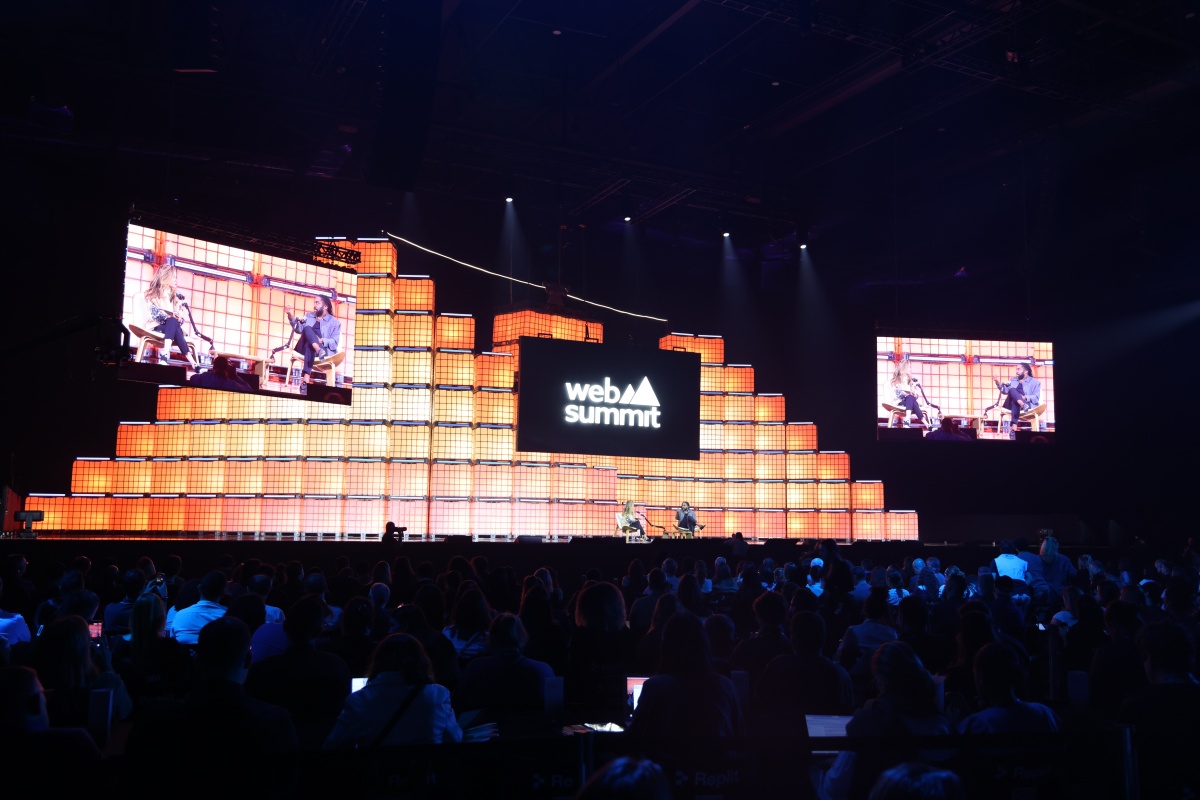
The sheer scale of Web Summit Rio 2026, which recently concluded in Brazil, serves as a powerful indicator of the current velocity of the global technology ecosystem. With a record-breaking 40,287 attendees converging on the Riocentro, the event transformed from a traditional tech conference into a high-intensity hub for international capital and industrial innovation. As highlighted by People's Daily, the summit’s growth—marked by a 12% increase in participating startups compared to 2025—reflects a maturing landscape where artificial intelligence, SaaS, and fintech are no longer just buzzwords but the primary drivers of investment.
The statistics from this year’s gathering are particularly revealing. The summit hosted 1,572 startups and 688 investment firms, creating a high-density networking environment. Perhaps most impressive is the long-term economic impact: since the inaugural event in 2023, the summit’s program has catalyzed $487.2 million in funding for 192 participating startups. This represents an average funding success of approximately $2.54 million per venture, a testament to the effectiveness of these summits in bridging the gap between early-stage innovation and institutional capital.
A significant shift observed this year was the surge in "solo founders." Organizers noted that the number of solo-led startups more than doubled compared to last year. This trend is a clear byproduct of the democratization of development tools—such as advanced AI and low-code platforms—which have drastically reduced the resource requirements and time-to-market cycles for product prototyping. When a single individual can leverage cloud-based AI to handle tasks that previously required a team of ten, the barrier to entry for global entrepreneurship collapses.
The summit also signaled a shift in the global hierarchy of innovation. The live demonstration of Unitree's G1 humanoid and Go2W robotic dog marked the first time non-human participants opened the ceremony, signaling the rising dominance of Chinese robotics and hardware in global markets. Furthermore, the explicit discussion regarding open-source AI models outperforming Silicon Valley’s closed-source incumbents suggests that the "moat" around proprietary AI is narrowing. As Artur Pereira, the country manager of Web Summit Rio, pointed out, the influx of Chinese investment and the rapid adoption of open-source architectures are fundamentally reshaping the competitive landscape.
Beyond the hardware, the event structure itself—comprising 14 thematic tracks and 479 speakers—showcased a deliberate pivot toward industry integration. With sectors like "Sport Summit" and "Machine Summit" taking center stage, the organizers are acknowledging that technology is now inseparable from health, sports, and heavy industry. With over 130,000 total attendees over its four-year history, Web Summit Rio has firmly established itself as a critical bridge between the Global South and the international venture capital community. As we look toward the next year, the data confirms a clear trend: lower overhead for startups, faster iterative cycles for AI products, and an increasingly multipolar geography of tech leadership.
News source: https://peoplesdaily.pdnews.cn/world/er/30052368083